

Core Field Amendment in GST and the Auto-Approval Coming Next
Which GST registration changes are core fields, how REG-14 approval works today, and what the 57th GST Council's auto-acceptance recommendation will change.
Ankush Goyal6 min
Author
Head of GST Department
Ankush Goyal is the Head of the GST Department at ComplyLocal Consultants, specializing in GST registration, amendments, return filing, notices, refunds, e-invoicing, e-way bills, and end-to-end GST compliance for businesses across India.
41 published posts
Which GST registration changes are core fields, how REG-14 approval works today, and what the 57th GST Council's auto-acceptance recommendation will change.

Exiting a marketplace state means closing that GSTIN in the right order: stock first, REG-16 next, GSTR-10 after, the virtual office last. Here is the sequence.
Two GSTINs at one address is allowed for different businesses, with conditions. The documents each needs, the same-PAN exception, and what an officer checks.

Same GSTIN or another state? How to document stock moving between your PPOB, APOB and warehouses, which e-way bill type to pick, and the 2026 transit changes.
Most consultancy services attract 18% GST, as CGST and SGST or as IGST. See which codes apply, when the client pays under reverse charge, and the export rules.
Service exporters under LUT build up unused ITC that can be refunded. See the refund formula, a worked example, documents, time limits and refund timelines.
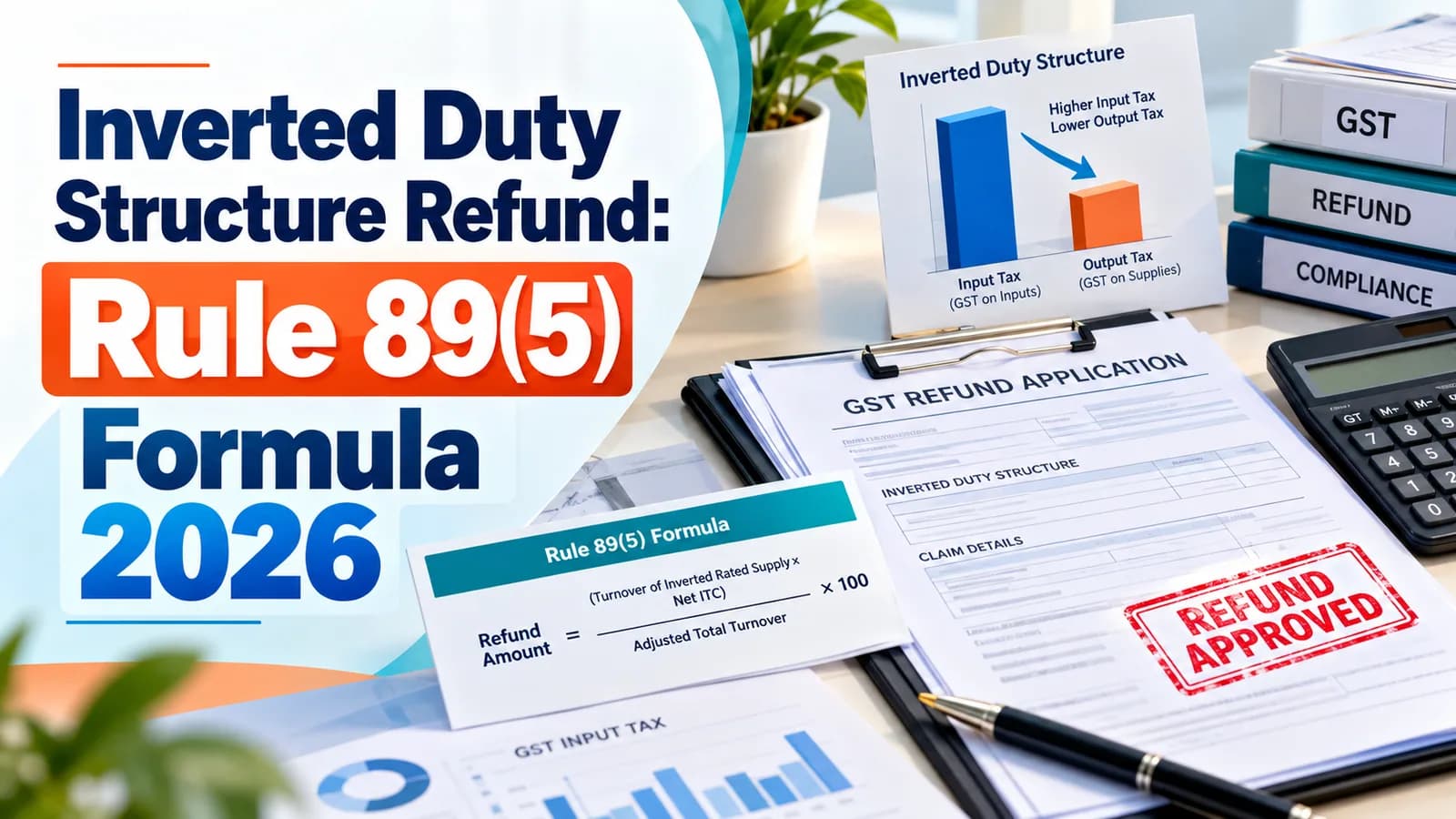
When inputs carry more GST than your output, credit piles up. See who can claim an inverted duty refund, how Rule 89(5) works, and how to file RFD-01.
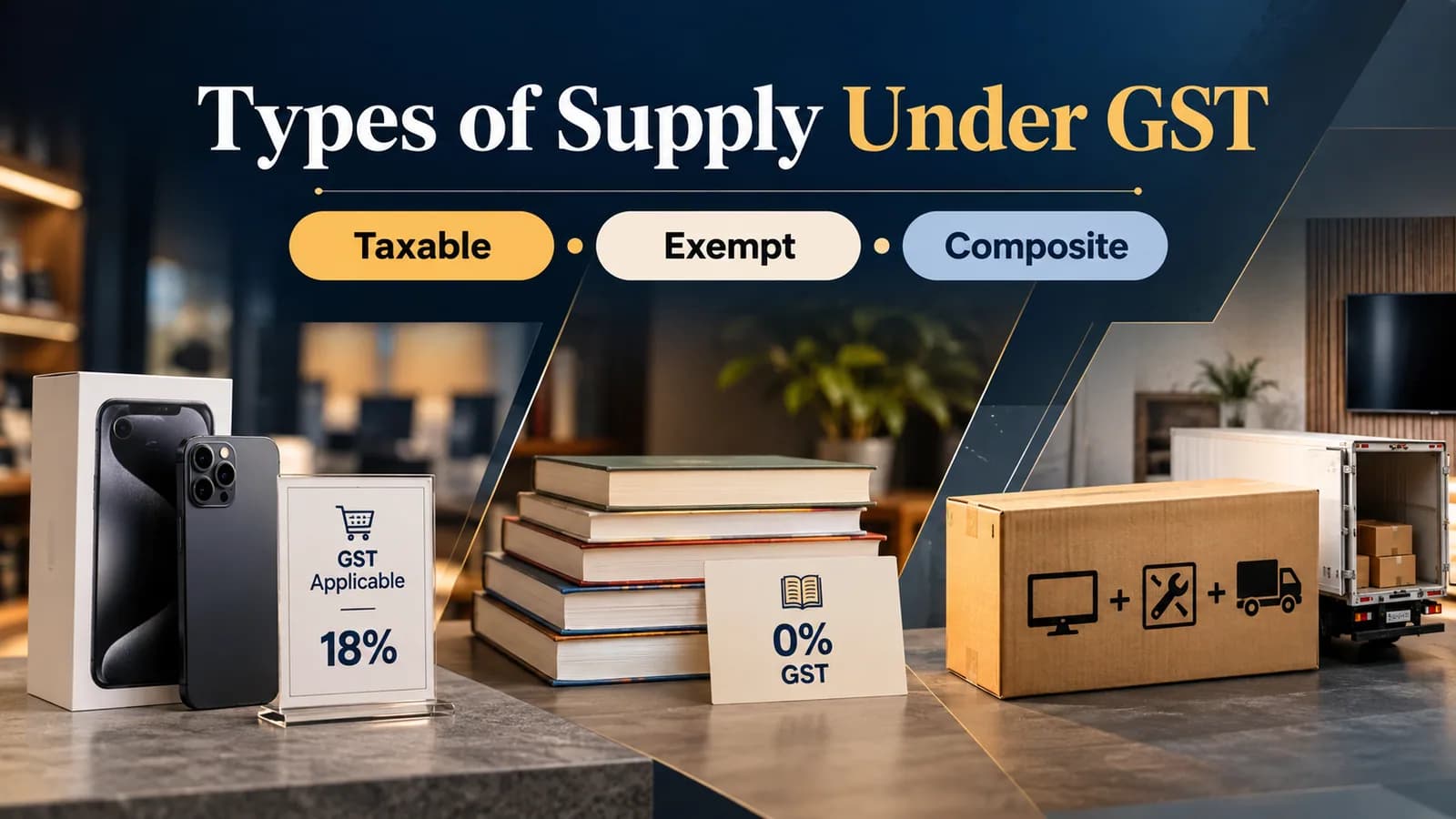
Every GST transaction is a type of supply that fixes the rate, tax head, credit and reporting. Here is each type of supply, with examples and GSTR-3B tables.
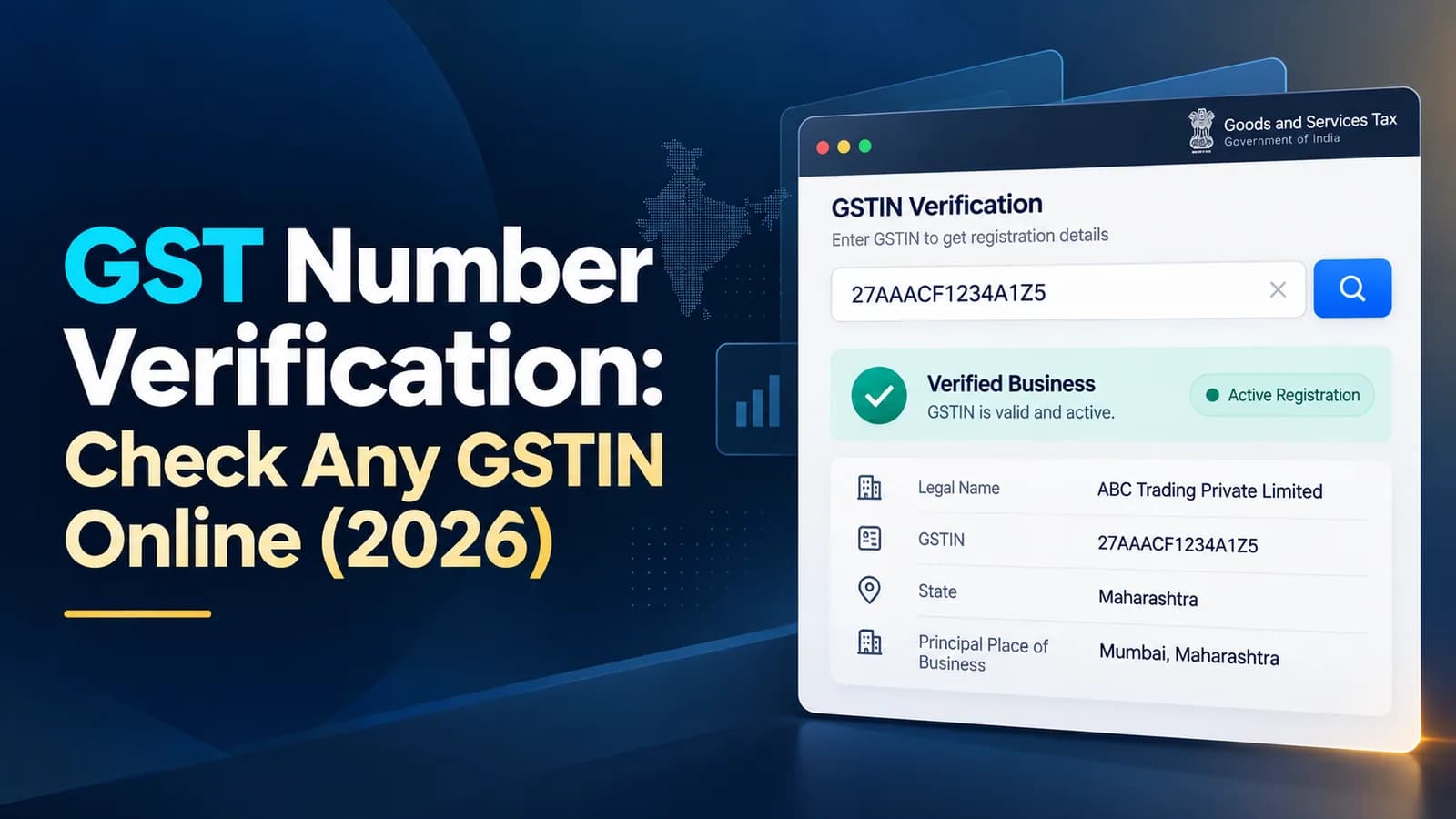
Verify any GST number free on the GST portal without logging in. See what to check in the result, how the 15-character GSTIN works, and the red flags to watch.
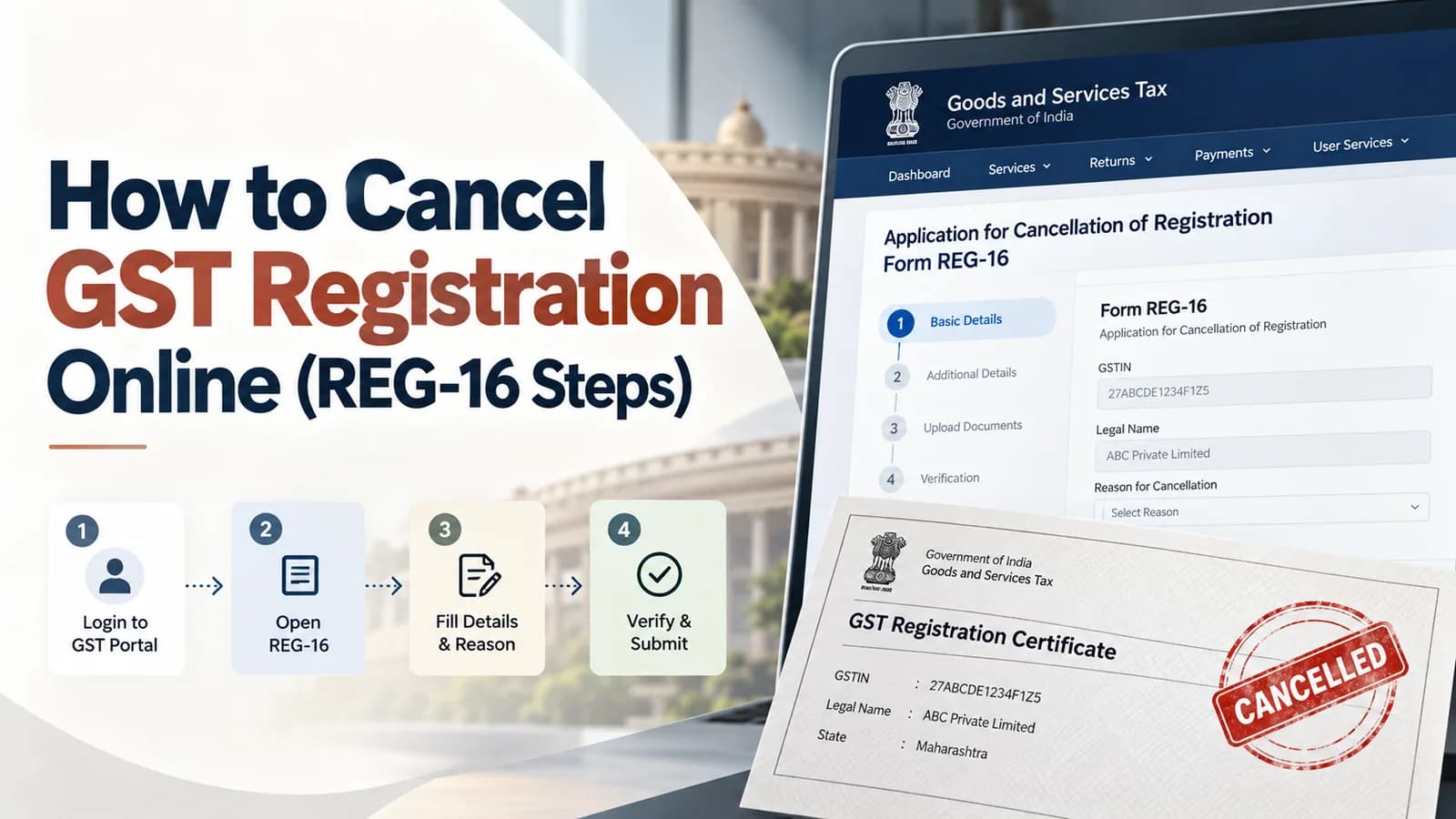
Closing a business or no longer liable for GST? Cancel the registration through REG-16, settle tax on closing stock, and file the GSTR-10 final return on time.
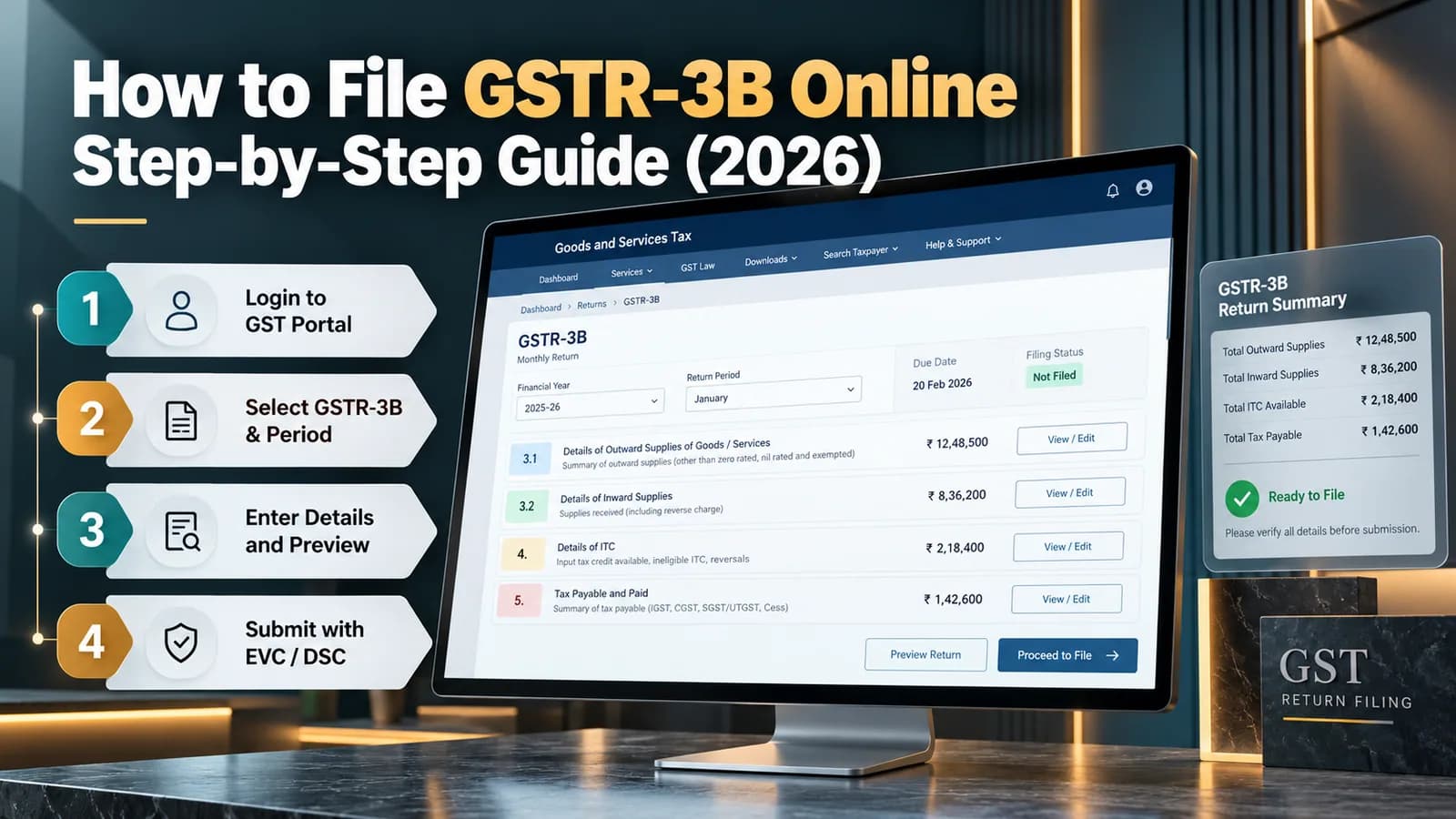
GSTR-3B is the return where you declare tax, claim credit and pay. Here is the filing process table by table, the 2025 portal changes and how to fix errors.

A Section 8 company is a non-profit company licensed under the Companies Act 2013. See what it can do, its rules, and when it beats a trust or society.
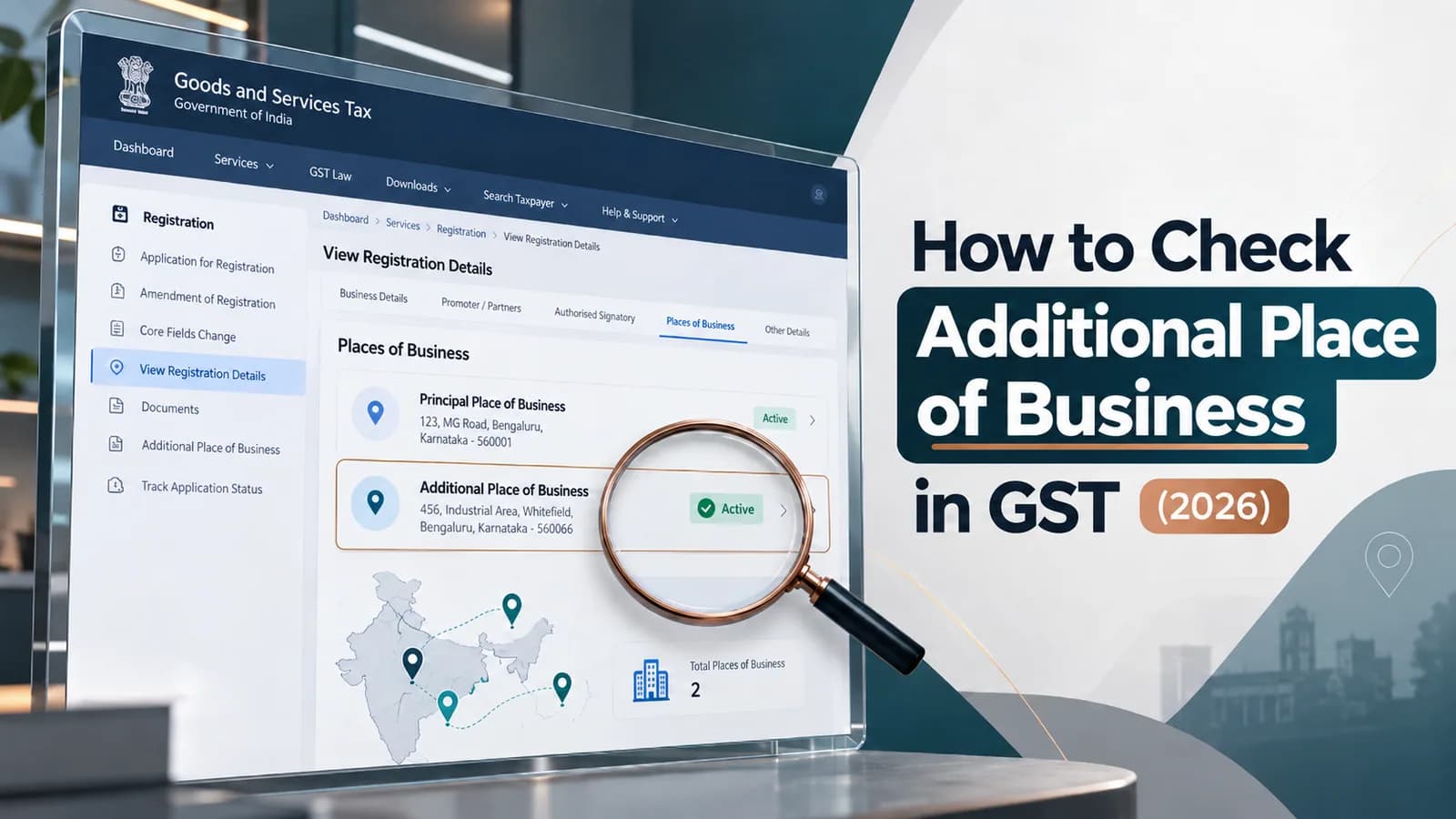
Three ways to check an additional place of business in GST, which one needs a login, where the APOB appears on REG-06, and why a new APOB may not show yet.

OPC stands for One Person Company: a private company owned by one person with limited liability. See who can form one, its rules and when it suits you.

The full document list for registering a company in India: what each director and shareholder provides, office address proof, NOC, DSC and the forms MCA needs.

Registering a company in India runs through one MCA web form, SPICe+. Here are the steps, costs, timelines and the filings due after you get your certificate.

LLP stands for Limited Liability Partnership: a registered business with partners whose liability is limited. See its features, rules and how it compares.
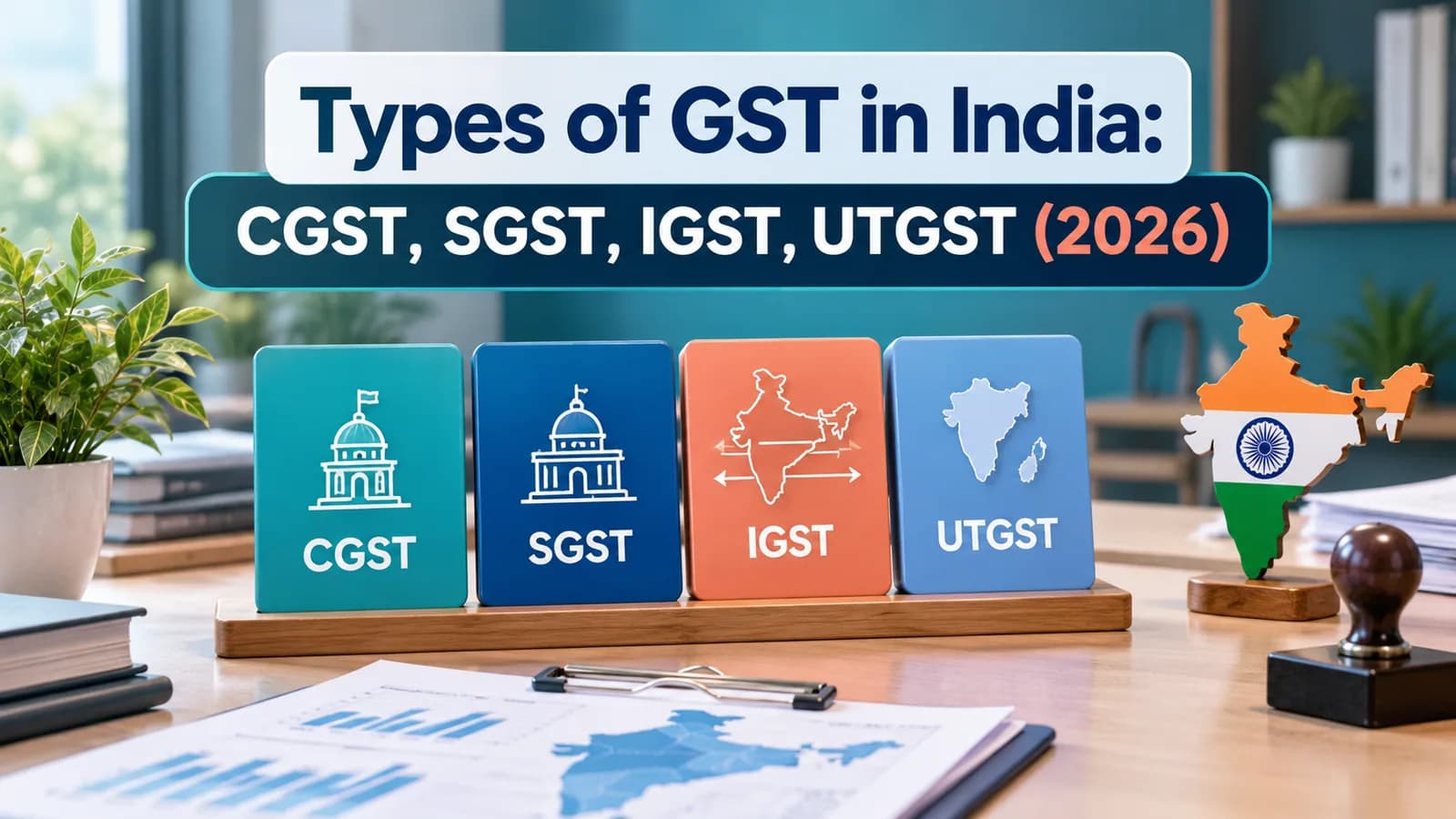
India has four types of GST: CGST, SGST, IGST and UTGST. Learn which one applies to a sale, how the 5%, 18% and 40% slabs work, and how credits are set off.
Monthly digest, written by CAs. Unsubscribe anytime.