Written by Ankush Goyal, GST Services Expert · Reviewed by Keshav Sehgal, E-commerce Filing Expert · Last updated: 19 September 2026
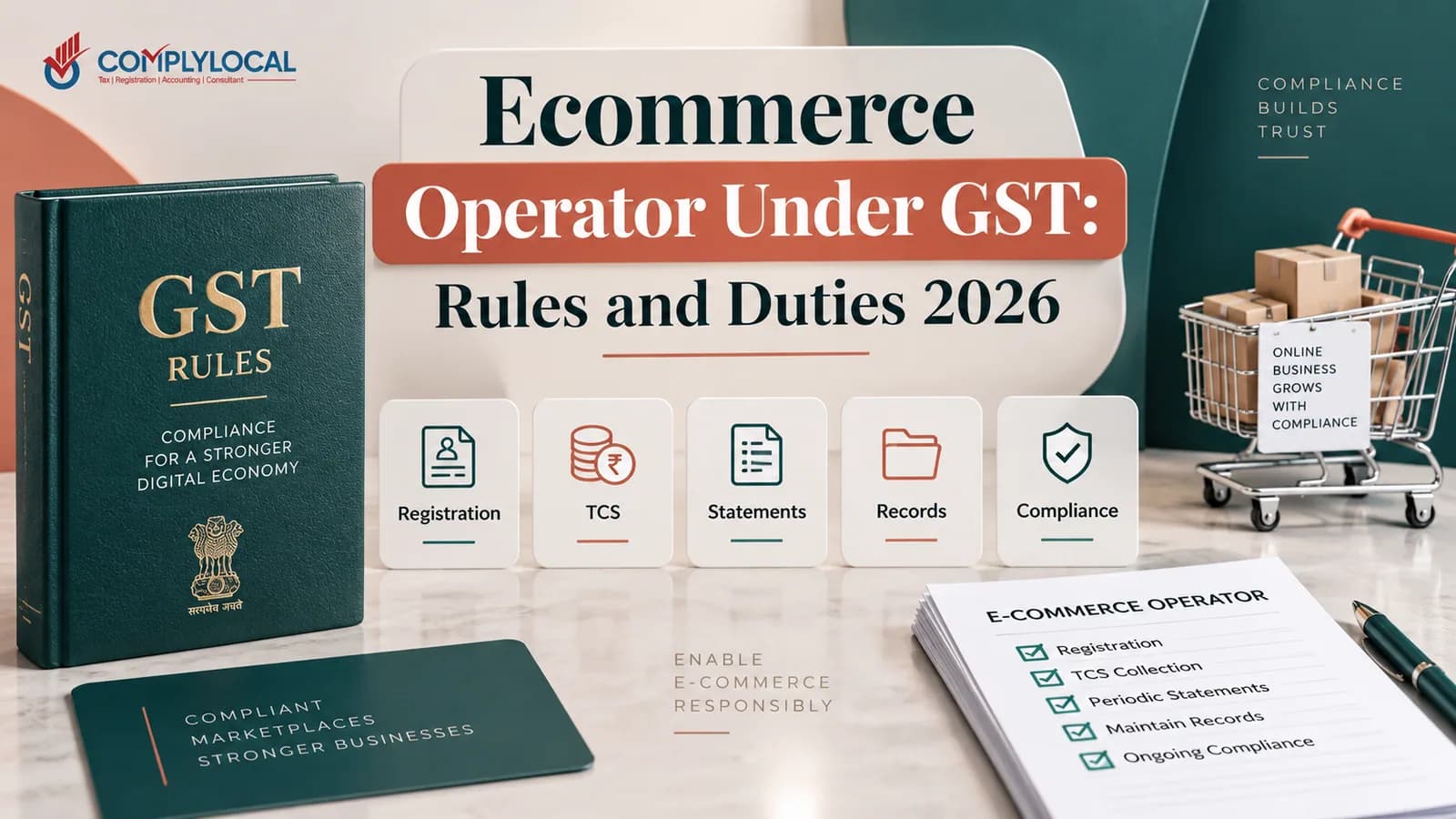
An electronic commerce operator is any person who owns, operates or manages a digital facility or platform for electronic commerce, under Section 2(45) of the CGST Act. That definition is wide enough to cover your own website.
Being an operator and having operator obligations are two different things. TCS under Section 52 applies only where other suppliers sell through you, and Section 9(5) applies only to four notified service categories. Most D2C brands are operators who owe neither.
What is an ecommerce operator under GST?
Section 2(45) of the CGST Act defines an electronic commerce operator as any person who owns, operates or manages a digital or electronic facility or platform for electronic commerce. Section 2(44) defines electronic commerce as the supply of goods or services over a digital or electronic network.
Amazon, Flipkart, Meesho, Swiggy, Zomato and Urban Company are operators. So is a brand running its own Shopify store, on a plain reading of the definition, because it owns and operates a digital platform over which supplies are made.
The consequences attach separately. Three distinct obligation sets exist, and an operator may fall under one, two or none of them.
The three obligations an operator can carry
Obligation | Trigger | Provision |
|---|---|---|
Collect TCS and file GSTR-8 | Other suppliers sell through the platform and the operator collects the consideration | Section 52 |
Pay GST as if it were the supplier | The platform carries one of the four notified service categories | Section 9(5) |
Register regardless of turnover | The operator is required to collect TCS under Section 52 | Section 24(x) |
Read the middle column carefully, because that is where most confusion sits. None of these is triggered by the label “ecommerce operator” on its own.
When TCS applies and when it does not
TCS under Section 52(1) is collected on the net value of taxable supplies made through the operator by other suppliers, where the operator collects the consideration. The words “by other suppliers” do the work.
Selling your own goods on your own account is not a supply by another supplier. The GST Council’s e-commerce FAQ addresses this directly: where an operator buys goods and then sells them through its own website, that second leg is a supply on its own account and no tax is collected at source. The sale still attracts GST at the normal rate.
So a D2C brand on Shopify is an operator with no TCS duty, no GSTR-8 filing and no Section 24(x) registration trigger. A brand that opens its store to partner brands on a commission model acquires all three.
The current rate is 0.5% of net taxable supplies, being 0.25% CGST plus 0.25% SGST for intra-state supplies or 0.5% IGST for inter-state, set by Notification No. 15/2024-Central Tax dated 10 July 2024. A large amount of published material still quotes 1%, which was the rate until 9 July 2024.
Net value means taxable supplies made through the operator during the month, reduced by supplies returned in the same month. The operator files GSTR-8 by the 10th of the following month, after which the credit appears for the seller to accept on the portal.
Section 9(5) services where the operator pays the tax
For four notified categories, the operator pays GST as though it were the supplier, and the actual service provider is out of the tax net for that supply.
The categories are passenger transport by radio taxi, motor cab, maxi cab and motorcycle, extended from 1 January 2022 to omnibus and other motor vehicles; accommodation in hotels, inns, guest houses, clubs and campsites; housekeeping services such as plumbing and carpentry; and restaurant services other than those supplied at specified premises. The master notification is No. 17/2017-Central Tax (Rate) dated 28 June 2017, amended by Notification No. 17/2021-Central Tax (Rate) dated 18 November 2021 and Notification No. 16/2023-Central Tax (Rate) dated 19 October 2023.
Two consequences follow for the underlying supplier. They get a threshold exemption from registration for those supplies, because the operator is discharging the tax. And no TCS is collected on them, since the operator is paying tax rather than collecting it from someone else’s consideration.
Reporting is split. The operator reports Section 9(5) supplies in Table 3.1.1(i) of GSTR-3B, and a registered supplier making such supplies through an operator reports them in Table 3.1.1(ii).
When your own store becomes an ecommerce operator with duties
The line is crossed when someone else’s goods or services are sold through your platform and you collect the money.
Three common patterns cross it. A D2C brand adding a partner-brand or curated-marketplace section where the partner invoices the customer. A platform that lists independent sellers and settles their payouts. A services business that connects customers to independent professionals and takes the payment centrally.
What does not cross it: dropshipping where you buy and resell on your own account, white-label goods manufactured for you, and affiliate arrangements where the customer pays the other party directly and you receive only a commission. In the affiliate case you are supplying a service to the other party, not operating a platform through which their supply is made.
Once crossed, the obligations start immediately. Registration under Section 24(x) has no turnover threshold, TCS collection begins on the first third-party supply, and GSTR-8 becomes due on the 10th of every following month.
Expert view: audit the model before the finance team finds out
The pattern we see most often is a growth decision taken without a tax review. A brand launches a partner section to widen its catalogue, and nobody tells finance that the company has just become a TCS collector.
Our recommendation is a short test applied to any new revenue line before it goes live. Ask three questions: does the customer buy from someone other than us, do we collect the money, and does the other party issue the invoice. Two yes answers put you in Section 52 territory and the compliance has to be built before the first order, not after the first quarter.
Retrofitting is expensive. TCS not collected still has to be paid, GSTR-8 returns have to be filed for every missed period, and the sellers who should have received the credit have a Section 16(4) deadline of 30 November following the financial year before it becomes unrecoverable.
Where you are the seller rather than the operator, the mechanics of claiming what the platform withheld are covered in our guide to GST return filing for online sellers, and matching those credits back to settlements is handled through TCS reconciliation services.
Not sure whether your platform is an operator under GST? Talk to Ankush’s team at Complylocal Consultants about GST compliance for online sellers.